

The Five-Minute Ritual That Gives Tired Parents Their Skin Back

Ask any new parent what they miss most and, after sleep, many will quietly admit it is the small rituals that used to be theirs alone. The long shower, the unhurried cup of coffee, the ten minutes of caring for yourself before the day begins. Parenting has a way of swallowing those moments whole. But looking after yourself does not have to mean an hour you do not have; sometimes it is five minutes and a good jar of something on the edge of the tub.
Why Parenthood Is Hard on Your Skin
Between the frequent hand-washing, the interrupted sleep, and the sheer go-go-go of raising little ones, a parent’s skin quietly takes the brunt of it. Hands crack from soap and sanitizer, and the glow we took for granted before children fades under stress and fatigue. It is not vanity to want to feel comfortable in your own skin; it is one of the small ways we stay recognizable to ourselves in the busy years.
This is where a simple, natural exfoliant earns its place on the shelf. A good goat milk body scrub sloughs away the dry, dull surface and leaves skin softer without the harsh chemicals that sensitive, stressed skin does not need. Goat milk is naturally rich in fats and lactic acid, so it moisturizes while it exfoliates, which is exactly what worn-out parent skin is crying out for.
If you have ever wondered how these creamy, milk-based products come together, this short video walks through the process:

What Makes Goat Milk So Gentle
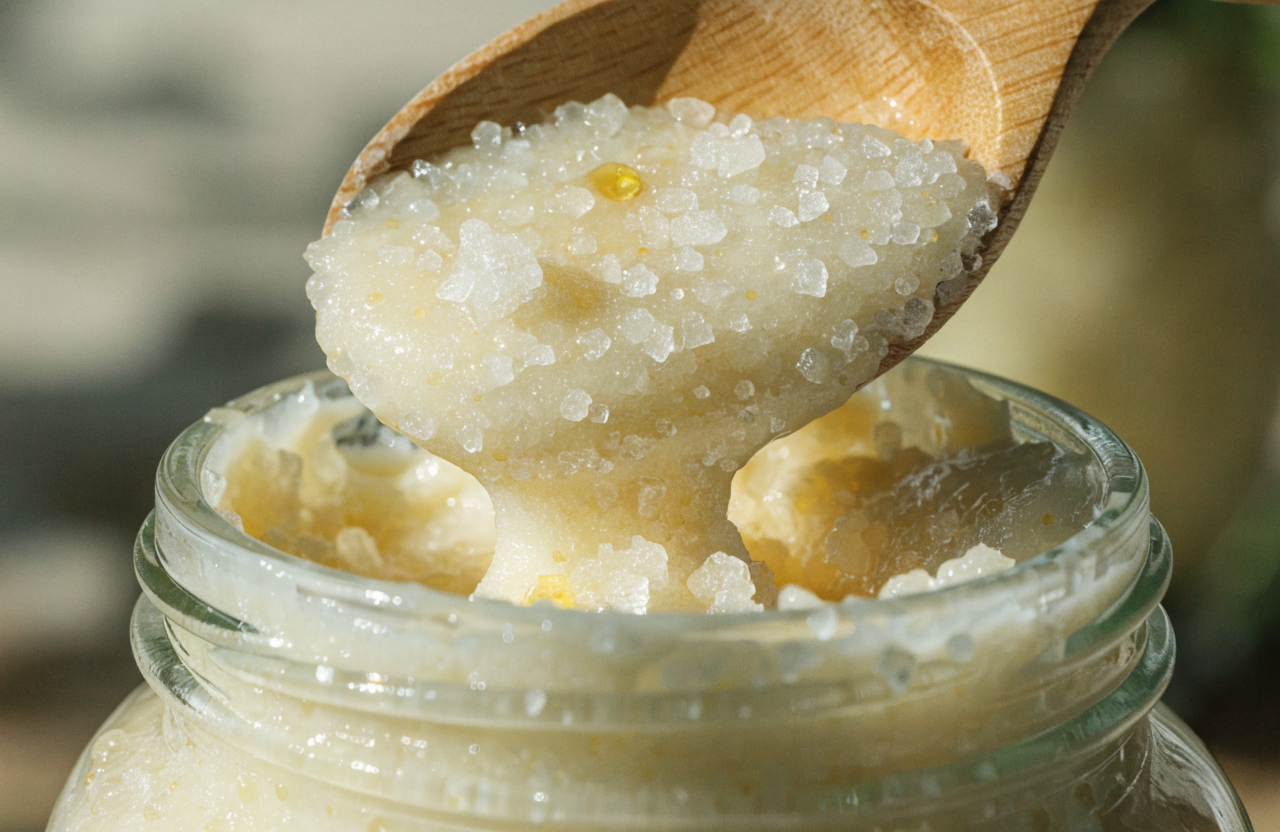
What makes goat milk such a kind ingredient is its similarity to our own skin. Its pH sits close to human skin, so it cleanses and softens without stripping or stinging. The naturally occurring lactic acid gently dissolves dead cells, while the cream and fats leave a protective layer of moisture behind. For anyone with the reactive, easily irritated skin that stress and exhaustion tend to bring on, that gentleness matters.
There is a family-friendly bonus, too. The same mildness that makes goat milk products good for a tired parent makes them a sensible choice for the whole household. Little ones have delicate skin that does not tolerate heavy fragrances and detergents well, and a natural, simple formula is far easier to trust on small arms and legs. A product you would happily use on your child is usually a product worth using on yourself.
Building a Habit You Will Actually Keep
The trick to actually keeping a self-care habit as a parent is to make it almost effortless. Keep the jar within reach in the shower, use it while the bath is running or the baby is having their five minutes of tummy time, and let it become part of the routine rather than another thing on the list. The parents who hold on to a little ritual are not the ones with more time; they are the ones who made the ritual small enough to survive a hard week.
You will spend these years pouring almost everything you have into someone else, and that is exactly as it should be. But a few minutes of caring for your own skin is not a betrayal of that; it is what lets you keep giving. Keep something gentle and good on hand, take the five minutes when they appear, and let one small corner of the day belong to you again.
Camping With Kids Past September: What a Hot Tent Changes
2026-09-10 by Owls Night • Uncategorized •
Most family camping ends the weekend the nights turn cold. You pack up in early September, put the gear in the loft, and wait until May. Which is a shame, because autumn is when the campsites empty out, the midges give up, and children finally get a fire that is interesting rather than just hot. The thing that usually stops us is the six hours between bedtime and sunrise, when a nylon tent is the same temperature as the field it is standing in.
What Actually Changes
A canvas tent with a small stove in it is a different proposition from a normal tent. Canvas breathes, so you get far less of the condensation that soaks a synthetic tent overnight, and a stove will lift the inside temperature well above outside. In practice that means bedtime is not a negotiation about how many layers everyone is wearing, and wet coats are dry by morning. For younger children in particular, being warm is most of the difference between a happy trip and one you quietly abandon at 2am.
The Safety Part, Properly
This is the section to read twice. A stove inside a tent produces carbon monoxide, which you cannot smell, and every year people are hurt because they closed the vents down to keep the heat in. Carry a battery carbon monoxide alarm, put it at head height near where you sleep, and test it before you leave home. Keep the tent’s vents open even when it is cold. Never damp the stove down and go to sleep with it smouldering; let it burn out and rely on sleeping bags for the rest of the night.
The second risk is simpler and more likely: a hot stove and a small child in a dark tent. The flue gets hotter than the firebox and it is at exactly toddler head height. Most families end up rigging a barrier of some kind, and nobody sleeps within arm’s reach of it. If your children are very young, honestly, one more year of summer-only camping is a fine answer.
Watch: HOT TENT Camping REALITIES & What to Expect (YouTube)
What to Look For
Two things matter more than brand. First, the tent needs a proper stove jack, the fireproof collar the flue passes through; do not improvise one. Second, a tent wood burner should be sized to the tent rather than bought for maximum output, because a stove that is too big will cook you out and burn through wood you then have to carry. A spark arrestor on the chimney is worth having with children about, and a flat, stable base matters more than you would think on soft autumn ground.
Worth the Faff?
It is more gear, more setup and more responsibility than throwing a dome tent in the boot. But it buys you two extra seasons, and children remember the cold trips with the fire far longer than the warm ones without.